The Ideal Paper Weight for Giant Freestanding Paper Roses


The Ideal Paper Weight for Giant Freestanding Paper Roses
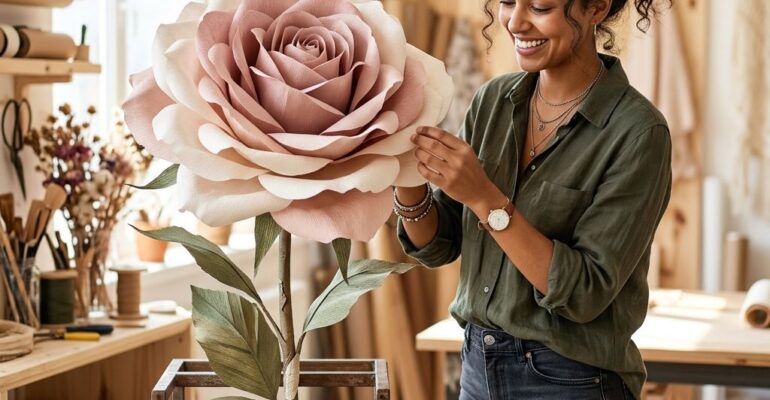
Welcome back to the craft room! One of the most common questions I hear from beginners is: “What kind of paper should I buy?” It’s an incredibly important question, because choosing the wrong paper weight for giant flowers will either leave you with floppy, droopy petals or stiff, unrealistic blooms that are impossible to shape.
Today, I’m pulling back the curtain on my favorite paper choices so you can save time, save money, and build giant flowers that truly wow your audience.
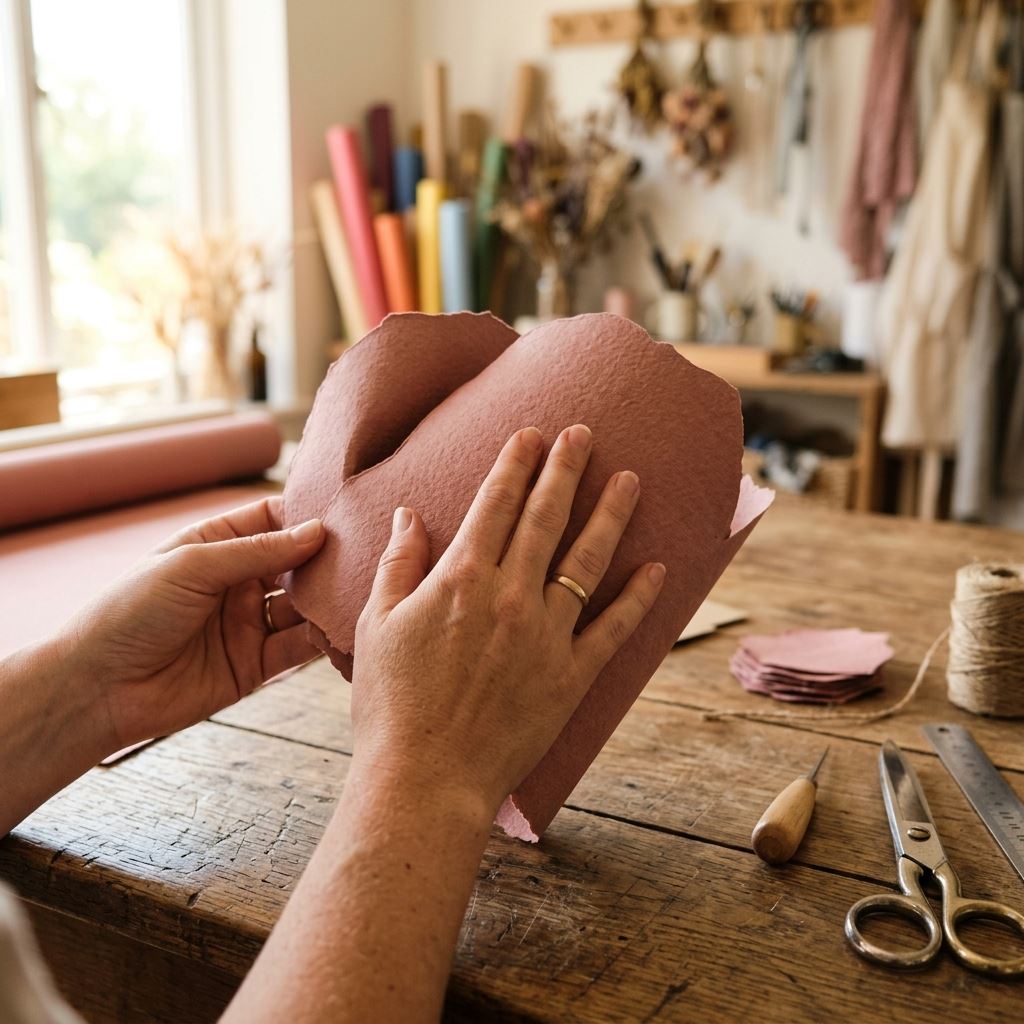
Understanding GSM (Grams per Square Meter)
When you walk down the aisle of your local craft store, you’ll see numbers like 65 lb, 110 lb, or 120 gsm to 300 gsm. For paper crafters, GSM (Grams per Square Meter) is the most universal and reliable way to measure paper thickness.
Let’s break down the different paper weights and how they affect your giant flower crafting:
1. The “Too Light” Zone (Under 120 GSM)
Standard printer paper is around 80 GSM. While papers in the 90–120 GSM range are incredibly easy to cut and curl, they are disastrous for giant freestanding flowers. The petals simply will not have the structural integrity to hold themselves up. Within a few hours, a 3-foot rose made from thin paper will collapse under its own weight, looking wilted.
2. The “Sweet Spot” (176 GSM to 250 GSM)
This right here is the golden standard. If you want a perfect balance between strength and flexibility, this is the optimal paper weight for giant flowers.
* 176 GSM (approx. 65 lb cover): This is excellent for giant flowers that have many layered petals (like peonies or large cabbage roses). It is easy on your wrists when cutting by hand, and it takes a curled edge beautifully with a wooden dowel.
* 200 GSM to 250 GSM: This is my personal favorite for giant freestanding roses. The petals have robust rigidity. They stand tall even in a mildly breezy venue, and they curve smoothly without creasing.
3. The “Too Heavy” Zone (300 GSM and up)
Cardstock over 300 GSM is practically cardboard. While your flower would be indestructible, the thick fibers make it incredibly difficult to cut with standard scissors. More importantly, when you try to curl a 300 GSM petal, the paper will likely crack, causing ugly creases rather than a smooth, organic curve.
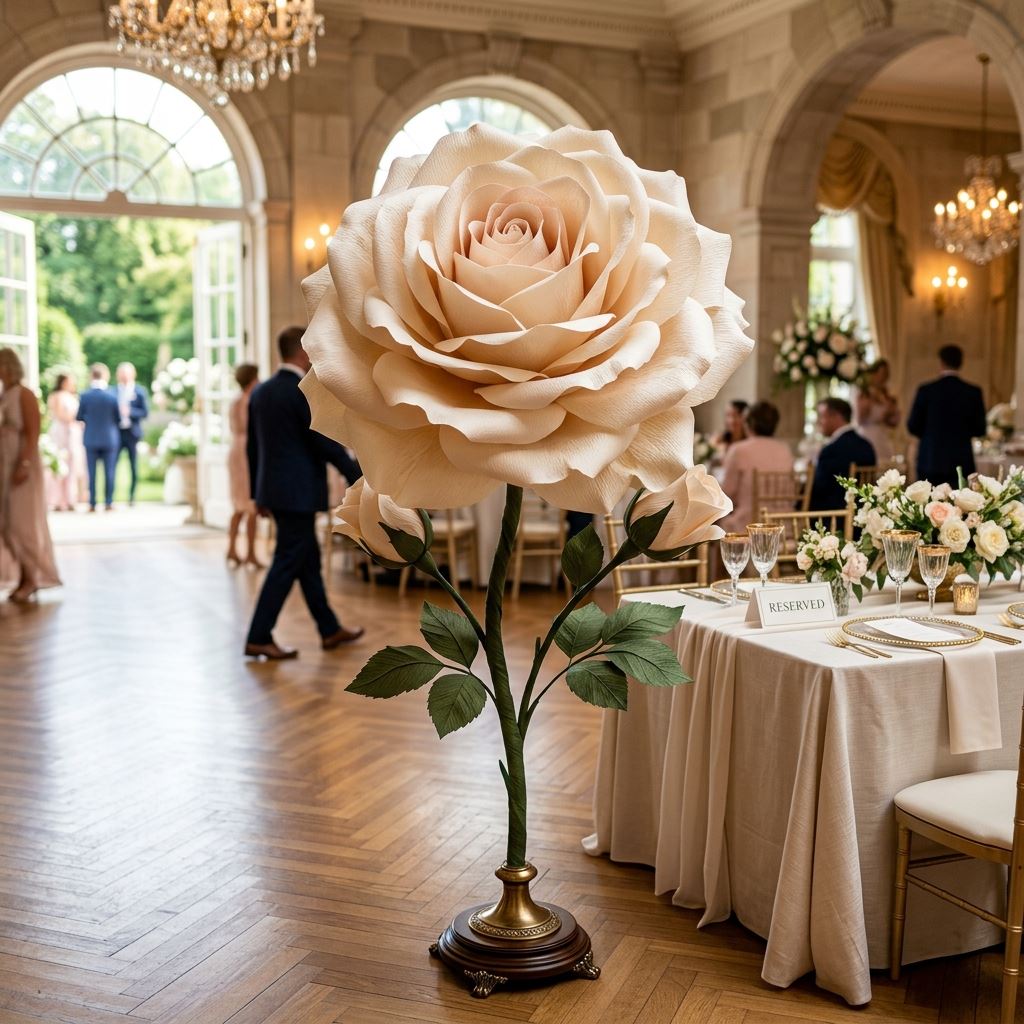
Finish and Texture Matters
Beyond just weight, consider the finish of the paper. Metallic and pearlescent cardstocks (often around 250 GSM) look absolutely incredibly under event lighting, giving your giant flower a premium, luxurious feel. Textured papers can add organic realism but can be harder to glue securely.
Get The Perfect Blueprint
Now that you know the exact paper weight you need, the next step is actually putting the scissors to the paper! Creating the perfect petal shape is an art form, but you don’t have to start from scratch.
If you are ready to start building immediately, head over to our expansive library of [Digital PDF Petal Templates & Video Courses](https://giantflowersvietnam.com/courses). Once you download my precise PDF patterns, pair them with the 200 GSM cardstock we discussed today, and you will be building jaw-dropping giant flowers by this afternoon! Happy crafting!
Frequently Asked Questions
Q: Can I combine different paper weights in a single giant flower?
A: Absolutely! In fact, combining different paper weights is a professional technique used to create highly realistic and structurally sound giant flowers. You should use a heavier paper weight (like 250 GSM) for the outer, bottom-most petals of the flower. These outer petals bear the most gravitational pull and form the supportive foundation. For the inner core and smaller center petals, you can switch to a lighter weight (like 120 GSM or 176 GSM). The inner petals don’t need to support any weight, and the thinner paper allows you to curl them much more tightly and intricately, mimicking the dense, delicate center of a real blooming rose.
Q: Does the paper weight affect how well hot glue holds the flower together?
A: Yes, paper weight plays a significant role in adhesive performance. Heavier cardstock (200+ GSM) has dense, sturdy fibers that provide a strong, stable anchor for hot glue. When you apply high-temperature hot glue to 250 GSM paper, the bond is incredibly secure. Conversely, if you try to use heavy amounts of hot glue on thin printer-weight paper (80 GSM), the heat and moisture of the glue can warp, wrinkle, or even burn through the thin material. Additionally, thin paper may tear around the glued area if any tension is applied, whereas heavy cardstock will distribute the tension evenly across the petal.
Q: Is textured cardstock heavier than smooth cardstock?
A: Not necessarily. GSM measures the actual weight and density of the paper fibers, while texture refers only to the surface finish. You can easily find a 120 GSM heavily textured “linen” paper that is physically lighter and weaker than a 250 GSM perfectly smooth matte cardstock. When choosing the best paper weight for giant flowers, you must look at the GSM number on the packaging rather than judging by the texture or how thick the paper “feels” to your fingers. However, keep in mind that heavily textured paper, regardless of its GSM, can sometimes be slightly more challenging to curl smoothly with a dowel, as the embossing may create natural fold lines.
Q: Will heavy cardstock (250 GSM) ruin or dull my cutting machine blades?
A: While heavy cardstock is tougher to cut than standard copy paper, high-quality cutting machines (like Cricut or Silhouette) are fully capable of handling 250 GSM paper without immediate damage. However, you must use the correct settings. You will need to select the “Heavy Cardstock” setting, ensure your blade is sharp, and often set the machine to make two passes (a double cut) instead of forcing a single, high-pressure cut. This prevents the paper from dragging or tearing. It is true that frequently cutting 250 GSM paper will dull your blades faster than cutting vinyl or thin paper, so you should keep replacement blades on hand if you plan to manufacture giant flowers in large quantities.
📚 Related Giant Flower Guides
- Read Next: Learn more about Curling Giant Paper Petals in our detailed guide on How to Curl Giant Paper Flower Petals Without Tearing.
- Read Next: Learn more about Eva Foam Giant Flowers in our detailed guide on EVA Foam vs Cardstock Paper: Which is Best for Giant Flowers?.