
Giant Organza Flowers: Achieving that Ethereal Glow



While paper offers crisp structure and foam provides durability, there is a third medium taking the event design world by storm: fabric. Specifically, giant organza flowers have become highly sought after for luxury weddings, high-end fashion displays, and elegant gala dinners. Their sheer, luminous quality brings a level of romance and sophistication that opaque materials simply cannot match.
However, working with fabric—especially a slippery, fraying material like organza—presents an entirely new set of challenges for crafters. You cannot rely on a heat gun to mold the shape, and you cannot simply glue paper tabs together. If you have ever tried to make an organza flower and ended up with a limp, fraying mess, you understand the frustration. Here is how to conquer this beautiful material and create gravity-defying, ethereal blooms.
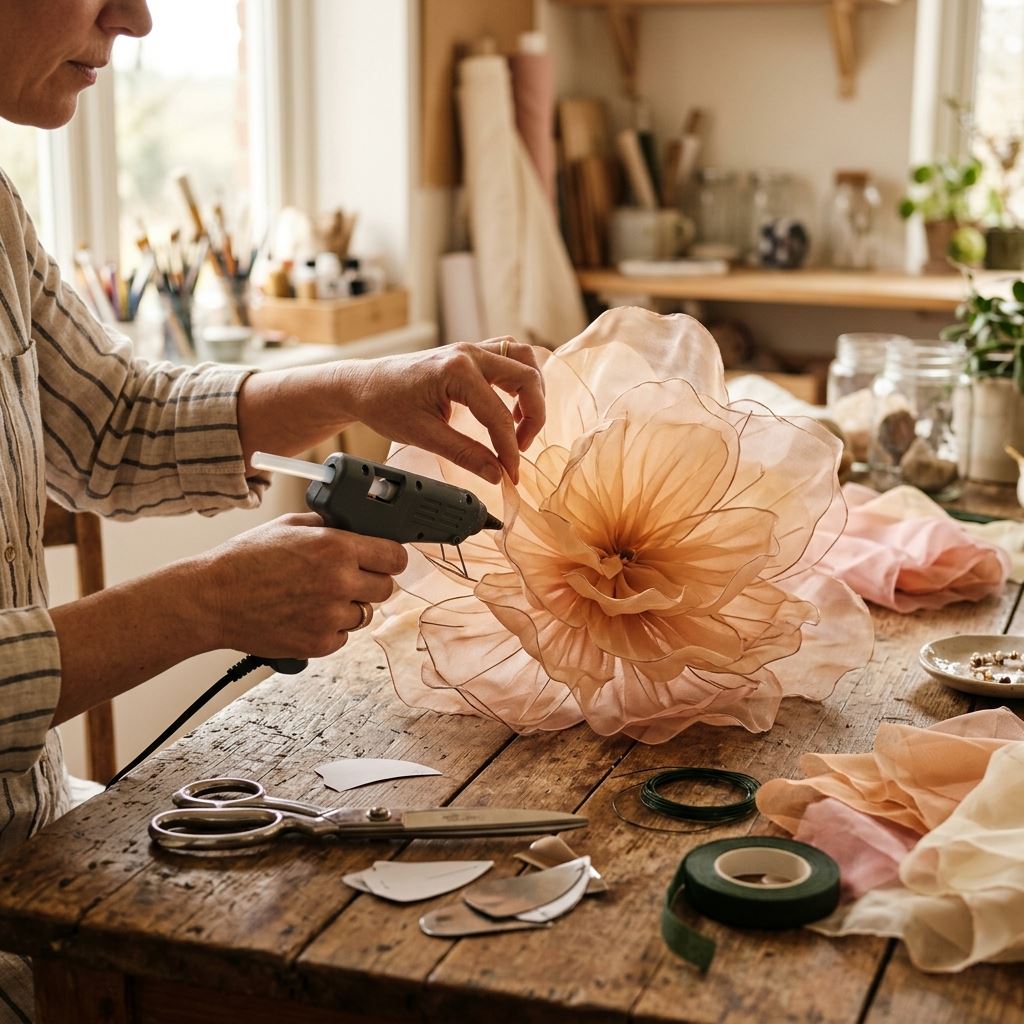
The Secret to Structure: Wire and Tulle
Organza by itself has no structural integrity. To make petals that stand up and curve beautifully at a massive scale, you must introduce a hidden skeleton.
The Wire Frame Technique
The most reliable method for creating giant organza petals involves building a frame from floral wire (typically 18 or 20 gauge, depending on the petal size). You bend the wire into the outline shape of your petal. Then, you stretch the organza tightly over this frame.
The Sandwich Method
To hide the wire and create a beautiful finish, you “sandwich” the wire frame between two layers of fabric. But here is the professional secret: do not just use two layers of organza. Use one layer of organza for the sheen and color, and one layer of stiff bridal tulle or crinoline underneath it. The tulle acts as an invisible support system, keeping the organza taut and preventing it from sagging in the middle of the large wire loop.
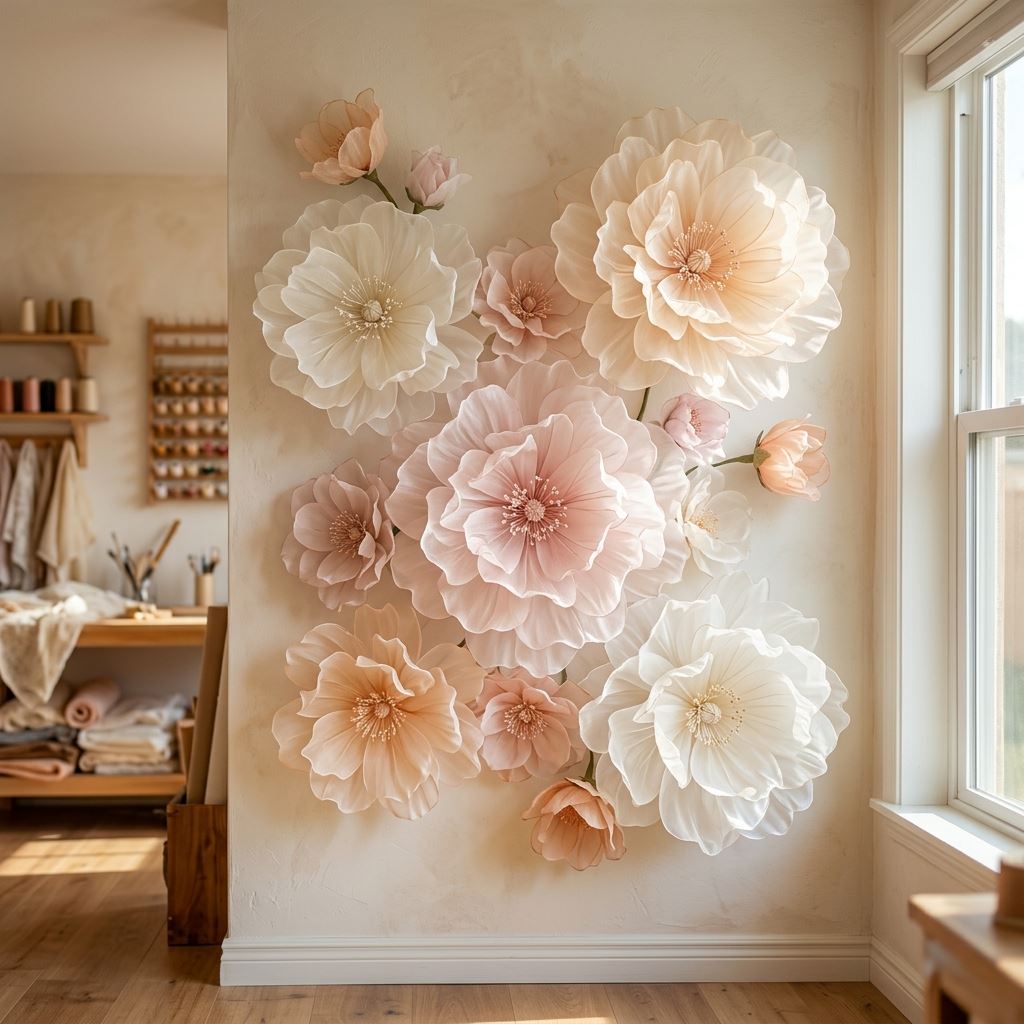
Securing the Edges Cleanly
How do you attach the fabric to the wire frame without it looking messy or fraying?
1. Sewing: The most durable method is using a sewing machine with a zigzag stitch right along the inside edge of the wire. Once sewn, you carefully trim the excess fabric as close to the stitch line as possible.
2. Heat Sealing: Organza is synthetic (usually polyester). This means it melts. You can stretch the fabric over the wire, apply a very fine line of fabric glue to hold it temporarily, and then use a heat cutting tool (like a hot knife) to trim the edge. The heat seals the fibers instantly, preventing any fraying and creating a clean, sharp petal edge.
Assembly for Maximum Impact
Because giant organza flowers are translucent, the mechanics of how you assemble them will be visible if you are not careful.
Unlike paper or foam where you can hide a messy glue base under the next layer of petals, organza requires a very clean assembly point.
Bind the wire stems of your finished petals together using strong floral tape. Start with the small inner petals and work your way out. To create a polished center that hides the taped stems, use clusters of large, pearl-like beads wired together, or create a dense center using a contrasting fabric like velvet or silk tightly gathered into a dome. You can also incorporate metallic stamens or crystal sprays to enhance the luxury aesthetic.
When lit from behind or above, the light passes through the sheer layers of organza, creating an ethereal, glowing effect that is absolutely mesmerizing. To maximize this impact in a venue, coordinate with the lighting designer to place subtle LED uplights directly at the base of the stems, or weave delicate copper wire fairy lights directly into the tulle backing of the largest petals.
Creating Dynamic, Flowing Leaves
A giant organza flower isn’t complete without foliage to anchor it, but traditional paper or foam leaves can look too heavy and break the ethereal illusion. Instead, create large sweeping leaves using the same wire frame and sandwich method, but utilize slightly heavier sheer fabrics, such as organza layered with a stiff metallic mesh, or a lightweight satin. This allows the leaves to catch the wind and flow beautifully alongside the delicate blooms, adding volume and movement to the overall installation without adding unnecessary visual weight.
Frequently Asked Questions (FAQ)
1. Is organza the only sheer fabric suitable for creating these giant illuminated flowers?
While organza is the most popular choice due to its crispness and radiant sheen, you can also use chiffon, voile, or even certain types of fine tulle. However, chiffon and voile are much softer and lack the natural stiffness of organza, meaning they require a much denser structural backing (like multiple layers of stiff crinoline) to prevent them from sagging on the wire frame. Organza strikes the perfect balance between structure and translucency.
2. How do I remove deep wrinkles or creases from organza fabric before making my petals?
Organza wrinkles very easily, and since the petals are translucent, any creases will be highly visible in the final flower. You should never iron organza on a high heat setting, as it will melt instantly. Instead, use a garment steamer on a low setting, keeping the nozzle a few inches away from the fabric. Alternatively, you can use an iron on the lowest silk/synthetic setting, and always place a clean cotton pressing cloth between the iron and the organza to protect the delicate fibers.
3. What is the most secure way to attach giant organza flowers to a backdrop or wall?
Because organza flowers rely on a wire skeleton, their base usually consists of a thick cluster of twisted wire stems. The most secure method is to bend the end of this thick wire cluster into a flat, 90-degree loop. You can then use heavy-duty zip ties to attach this loop directly to a metal pipe-and-drape frame or a sturdy wire grid panel. For solid walls, you may need to use heavy-duty command hooks and securely wire the flower’s stem loop onto the hook.
4. Can giant organza flowers be used for outdoor events, or are they strictly for indoor use?
Giant organza flowers are exceptionally beautiful outdoors because they catch the natural sunlight and breeze beautifully. However, they are also incredibly lightweight and act like sails in the wind. If used outdoors, they must be mounted on extremely heavy, weighted bases to prevent tipping. Additionally, organza is not waterproof. If heavy rain is expected, the flowers must be brought indoors, as water will ruin the delicate crispness of the fabric and weigh down the petals, causing them to lose their shape.
Ready to elevate your crafting portfolio with premium fabric techniques? Discover step-by-step guides for mastering organza, silk, and more in our [Giant Flower Masterclasses](https://giantflowersvietnam.com/courses).
📚 Related Giant Flower Guides
- Read Next: Learn more about Diy Giant Paper Sunflowers in our detailed guide on DIY Giant Paper Sunflowers: A Step-by-Step Guide for Summer.
- Read Next: Learn more about Foam For Giant Flowers in our detailed guide on Choosing the Best Foam for Giant Flowers: A Crafter’s Guide.