
How to Price Your Giant Flower Installations for Profit

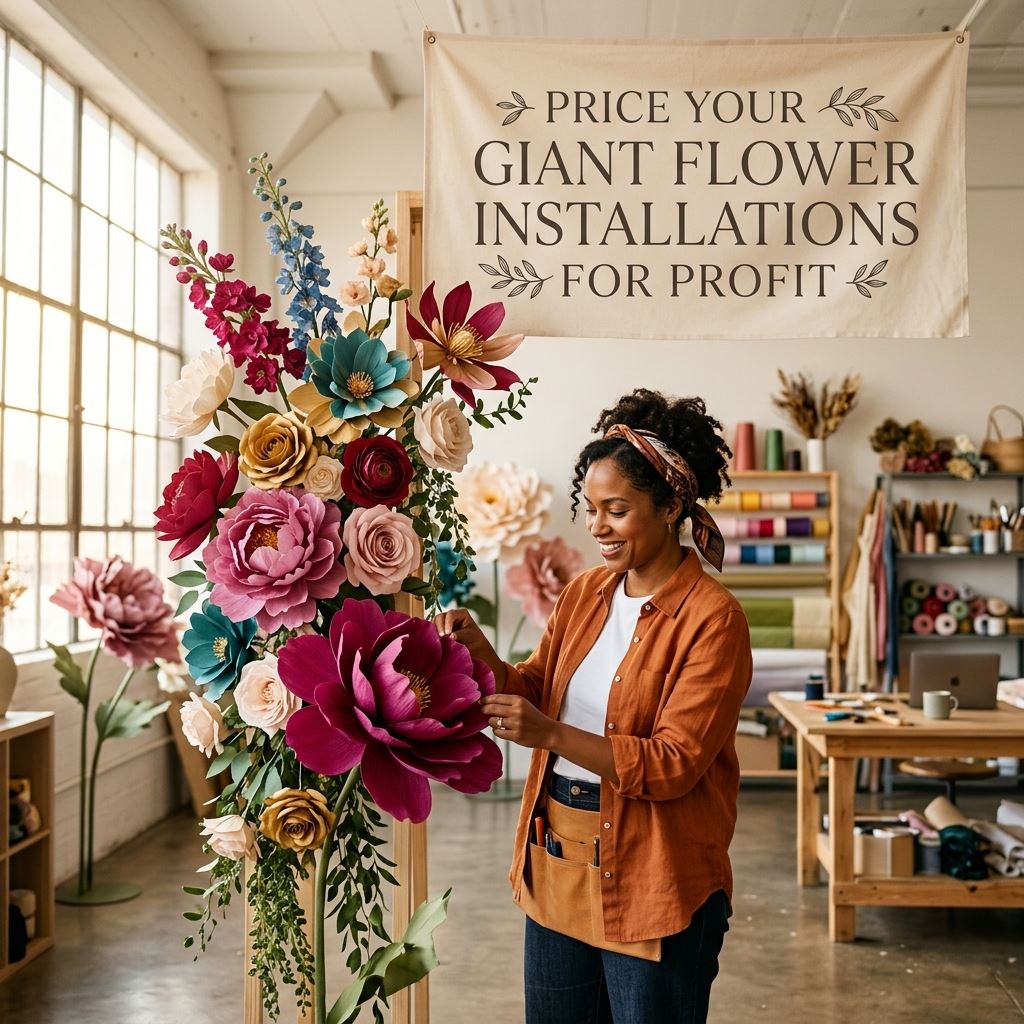
Transitioning from crafting as a hobby to running a profitable business is an exciting milestone. You have mastered the techniques, your giant paper and foam flowers look stunning, and now people are asking to buy them for weddings, store displays, and parties. But then comes the most stressful question for any creative entrepreneur: *”How much should I charge?”*
If you guess a number based on what feels “fair” or what you think a client will pay, you are likely severely undercharging. Many talented crafters burn out quickly because they end up working for less than minimum wage. To build a sustainable business, you must remove the emotion from pricing and rely on a solid mathematical formula. Here is exactly how to price your giant flower creations to ensure you are profitable.
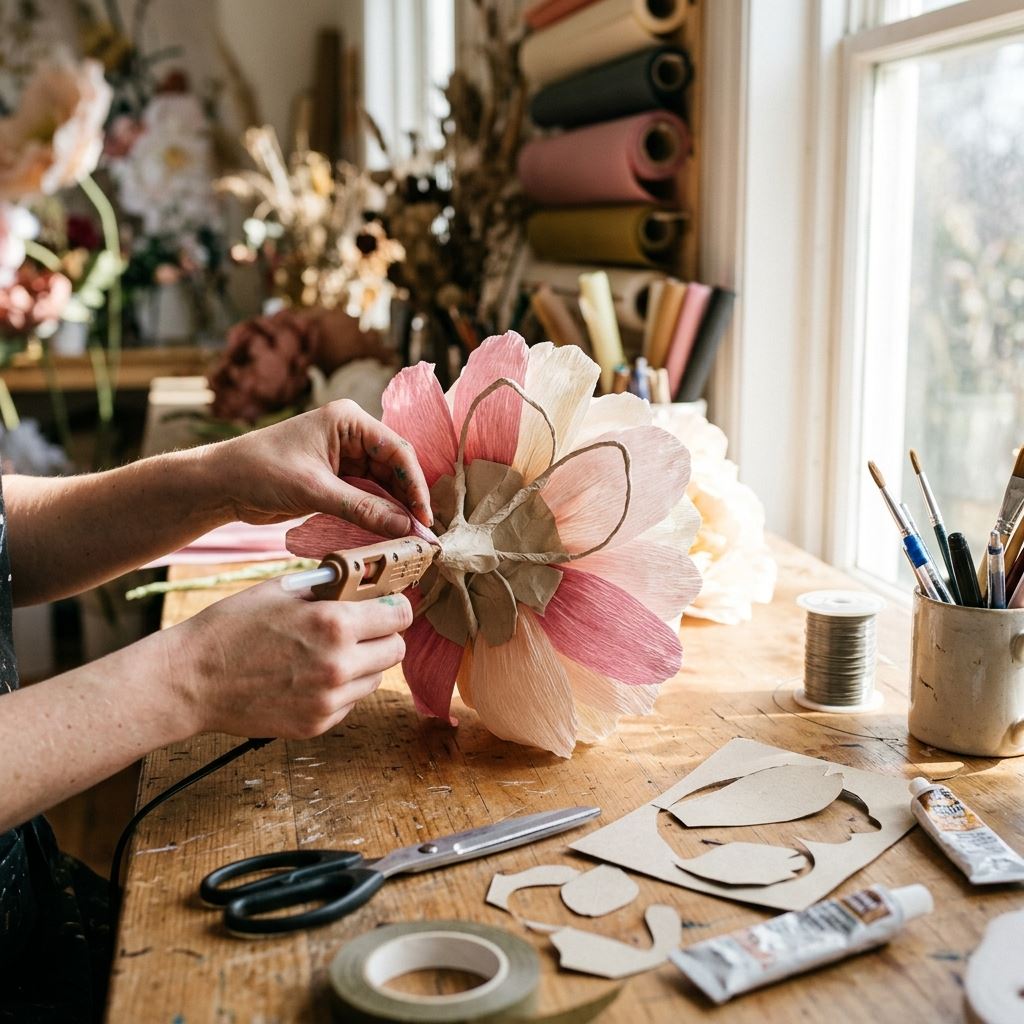
Step 1: Calculate Your Exact Material Costs (COGS)
The first step is knowing exactly what goes into each flower. COGS stands for Cost of Goods Sold. You cannot just guess that a flower cost “$5 in paper.” You need to calculate everything.
* Primary Materials: How many sheets of cardstock or square meters of EVA foam did you use? Calculate the exact cost per sheet/meter.
* Consumables: How many hot glue sticks did you melt? How much floral tape and wire was used?
* Hardware: Did you use PVC pipes, heavy wooden bases, or specialized hanging hardware?
* Packaging: If you are shipping or delivering, factor in the cost of the large boxes, bubble wrap, and tissue paper.
Formula Check: Total every single penny spent on the physical creation of the product. This is your Material Cost.
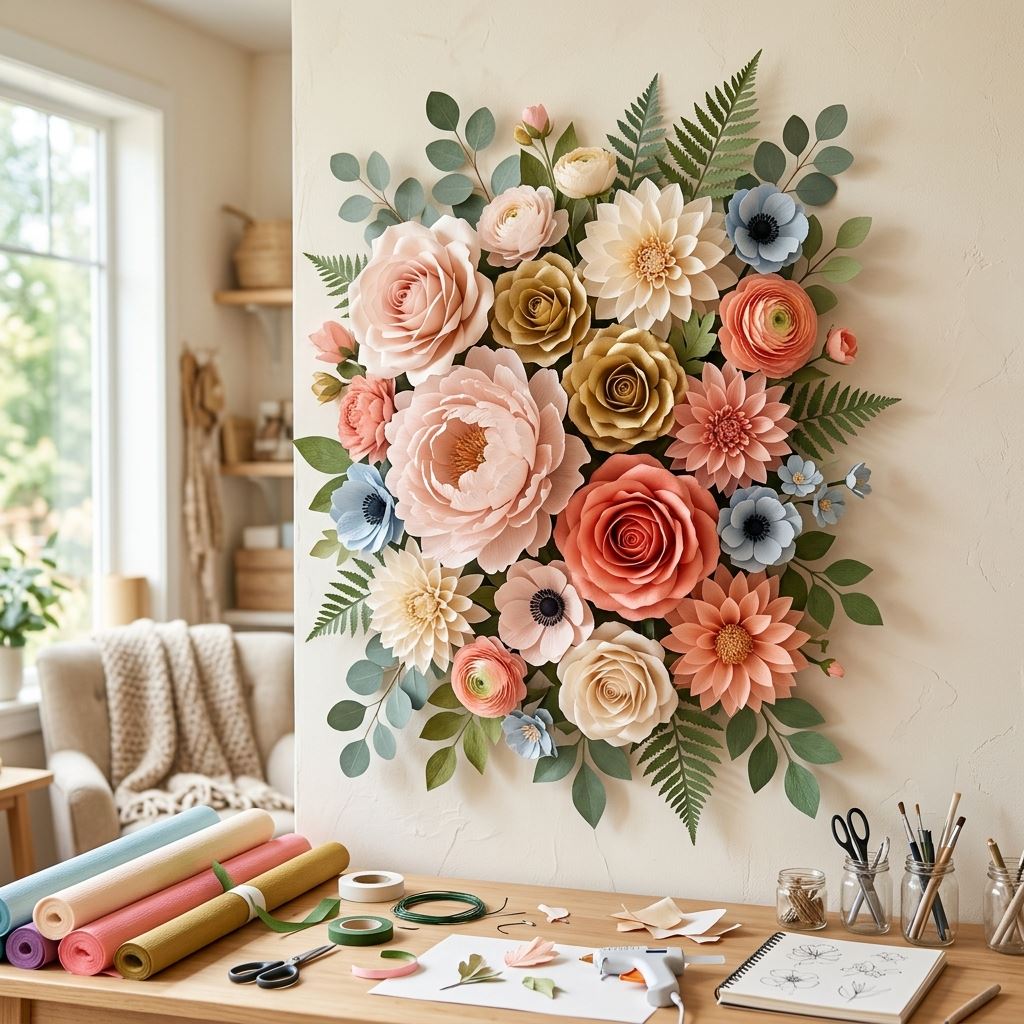
Step 2: Value Your Time (Labor Cost)
This is where almost all crafters make a fatal mistake: they do not pay themselves an hourly wage. You are providing skilled labor.
Determine an hourly rate for yourself. If you are a beginner, this might be $15-$20/hour. If you are an experienced professional producing complex, flawless designs, it should be $30-$50+/hour.
Next, you must track your time meticulously. How long did it take to design the template, cut the materials, shape the petals, assemble the flower, and pack it?
Formula Check: (Hours Worked) x (Hourly Wage) = Labor Cost.
Step 3: Factor in Overhead
Overhead includes the hidden costs of running your business that are not tied directly to one specific flower.
* Website hosting fees.
* Electricity used by your hot glue gun and cutting machines.
* Wear and tear on your tools (scissors get dull, machines break).
* Marketing and advertising costs.
A standard way to account for this is to add an overhead percentage (usually 10% to 20%) to your base costs.
Step 4: The Profit Margin
Cost is what it takes to *make* the flower. Price is what you *sell* it for. The difference is profit. Profit is what allows your business to grow, to invest in new tools, or to provide a cushion for slow months.
A healthy profit margin for handcrafted goods is typically 30% to 50%.
Step 5: Consider Market Positioning and Perceived Value
While the mathematical formula ensures you do not lose money, your final price should also reflect your brand’s market positioning. Are you selling budget-friendly paper flowers for local children’s parties, or are you creating luxury, hand-tinted Isolón installations for high-end corporate galas?
If your target market is the luxury sector, your prices must reflect that prestige. Sometimes, pricing a product *too low* can actually deter high-end clients, as they may perceive the low price as an indicator of poor quality or amateur craftsmanship. Do not be afraid to add a “premium design fee” for highly customized or extremely intricate designs that require your unique artistic vision.
The Final Pricing Formula
To correctly price your giant flower installations, use this standard pricing formula:
(Materials + Labor + Overhead) x Profit Margin Multiplier = Wholesale Price
*(Multiplier: For a 50% margin, multiply your costs by 2).*
Wholesale Price x 2 = Retail Price
*Wait, multiply by 2 again?* Yes. If you ever want to sell your flowers to event planners at a wholesale discount, or sell them in a boutique, your retail price must be high enough to absorb that discount and still leave you with profit. Even if you only sell directly to consumers right now, pricing at the retail level from the start prevents you from having to drastically raise your prices later when you want to expand into wholesale or B2B sales.
Frequently Asked Questions (FAQ)
1. Should I charge a delivery and setup fee separately, or include it in the price of the giant flower installation?
You should always charge delivery and setup fees separately, rather than hiding them in the flower’s base price. Installations vary wildly depending on the venue—setting up a backdrop in a first-floor living room is completely different from carrying 50 giant flowers up three flights of stairs for a hotel ballroom event. By itemizing delivery and setup (usually charged at an hourly rate plus mileage), you ensure you are fairly compensated for the logistics of each specific job, and it shows the client exactly what they are paying for.
2. I am just starting out and my giant flowers take me a very long time to make. Will charging my hourly rate make my prices too high for anyone to buy?
This is a very common concern for beginners. If a flower takes you 6 hours to make because you are still learning, but a pro could make it in 2 hours, charging for 6 hours of labor will indeed price you out of the market. In the beginning, calculate your labor based on the *average* time it should take a competent crafter, rather than your actual slow learning time. As you get faster and more skilled, your actual time will match the formula, and eventually, you will be making more per hour because of your efficiency.
3. Event planners keep asking for a “discount” or offering “exposure” in exchange for my giant flowers. How should I handle this?
Never give away your product for free in exchange for “exposure,” as exposure does not pay your material costs or bills. If a reputable event planner asks for a discount, you can offer them a standard industry “trade discount” (usually 15% to 20% off the retail price), provided they order a minimum quantity or sign an ongoing contract. This is exactly why the *Wholesale Price x 2* formula is so important; it gives you the financial cushion to offer these professional discounts while still remaining fully profitable.
4. How do I price rental giant flower backdrops compared to flowers the client buys and keeps?
Rentals are an excellent way to generate passive income. A standard industry practice is to price the rental of a floral backdrop at roughly 30% to 50% of its total retail value. This means that after 2 or 3 rentals, the backdrop has paid for itself entirely, and every subsequent rental is almost pure profit (minus minor maintenance and delivery costs). Always require a refundable damage deposit for rentals to cover any accidental tears or stains.
Pricing correctly validates your work as professional art. Ready to elevate your craft and build a thriving business? Explore advanced techniques and business tips in our [Giant Flower Masterclasses](https://giantflowersvietnam.com/courses).
📚 Related Giant Flower Guides
- Read Next: Learn more about Giant Paper Flower Tools in our detailed guide on Essential Tools for Giant Paper Flower Making: A Beginner’s List.
- Read Next: Learn more about Giant Floral Arches in our detailed guide on Giant Floral Arches for Wedding Backdrops: Design Tips.