Top 5 Mistakes Beginners Make When Crafting Giant Flowers


—
Focus Keyword: craft giant flowers
Meta Description: Avoid the top mistakes beginners make when they craft giant flowers. Learn how to choose the right paper weight, master hot glue techniques, and Discover how!
—
Top 5 Mistakes Beginners Make When Crafting Giant Flowers
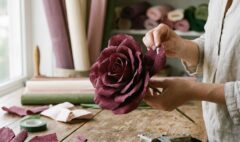
Have you ever stood in front of a breathtaking giant flower backdrop at a luxury wedding or a high-end brand launch and felt your heart skip a beat? There is something truly magical about oversized blooms; they transform any space into a fairytale and turn every photo into a masterpiece. And then, you think to yourself: “I can do that too!” You excitedly buy your paper, grab a glue gun, and start cutting. But the reality is often trickier than imagined. After five hours of hard work, your flower looks… tired. The petals are drooping, and messy glue strings are everywhere.
Don’t worry, you are not alone! Even the master crafters at Giant Flowers Vietnam started with piles of scrap paper and burnt fingertips. Crafting is a journey of trial and error. However, to help you skip the frustration, I’ve compiled the five most common “classic” mistakes that almost everyone makes when searching for a giant paper flower tutorial for beginners. Let’s dive in so you can avoid these pitfalls and make your very first bloom a professional success!
1. Choosing the Wrong Paper Weight
This is the first hole most beginners fall into. The common mindset is: “I’m just practicing, so I’ll buy cheap, thin paper.” Or you go to a local craft store and pick up lightweight construction paper. The result? Giant petals, often 30-40cm wide, don’t have enough “backbone” to stand up. They will collapse under their own weight the moment you hang the flower.
On the flip side, if you choose paper that is too thick (like heavy industrial cardboard), you will struggle to create soft curves. The petals will crease and snap, creating sharp, ugly edges instead of graceful waves. A standard giant paper flower tutorial for beginners always emphasizes: “The paper is the soul of the flower.”
The ideal weight is between 160gsm and 200gsm (cardstock). This weight is sturdy enough to hold its shape but flexible enough to curl beautifully. Remember, good material is 50% of the battle won.
2. The Glue Gun War: Too Much or Too Little
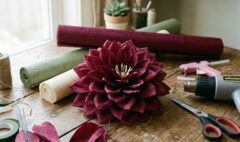
A glue gun is a crafter’s best friend, but controlling it is an art form. A common mistake is applying a massive glob of glue, hoping it will be “extra secure.” In reality, too much hot glue takes longer to cool and set, and it often leaks out from under the petals, creating unsightly plastic lumps.
Conversely, using too little glue or a low-temp gun will make your flower fragile. It might look okay initially, but after a few hours or during transport, the layers will start falling apart.
The pro tip? Use a high-temp glue gun, apply a moderate amount exactly where the petal meets the base, and—most importantly—press and hold for 7-10 seconds. Be patient; let the temperature drop so the glue truly grips the paper fibers.
—
A quick break to boost your confidence…
I know, trying to figure everything out from scratch can be overwhelming. That’s why at Giant Flowers Vietnam, we have built an A-to-Z learning path. Instead of wasting stacks of expensive paper on “trial and error,” you can use our precise PDF templates. These designs are specifically made for relaxing hand-cutting (no Cricut needed!) and guarantee success on your first try. We don’t just sell templates; we give you the confidence of a master artisan.
—
3. Skipping the “Soul” – The Curling Technique
Look at a real flower in a garden. Do you see any petal that is perfectly flat? Absolutely not. Natural petals have curves, twists, and lively waves.
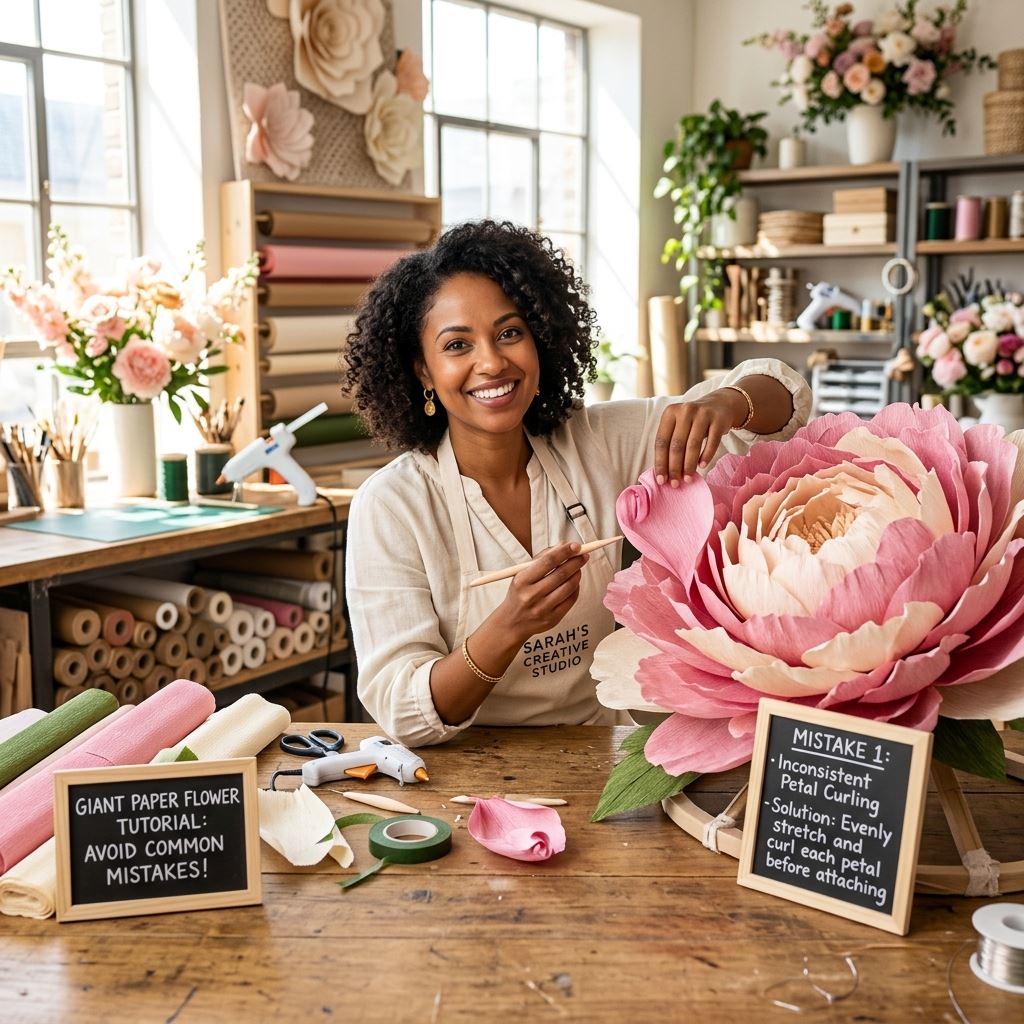
A mistake many people make when watching short giant paper flower tutorial for beginners clips online is focusing only on the assembly. If you just cut and paste flat shapes, your flower will look like a cheap toy. To make the flower “live,” you must use a round rod, a PVC pipe, or even the edge of a table to gently curl the petals. Roll the edges outward, add a slight crease in the middle for depth—these tiny details are what separate a “hobbyist” project from a professional art piece.
4. Underestimating the Power of a Template
Many beginners have a “gift” for drawing and think they can just freehand the petals. While artistic, this is incredibly time-consuming and risky. Consistency is key in giant flowers. If you freehand, petal #1 and petal #5 will inevitably be different. When you assemble them in a circle, the flower will look lopsided or have strange gaps.
A real giant paper flower tutorial for beginners will always rely on standardized templates. Using a template ensures that your proportions are perfect from the outer layer to the center. Don’t try to “reinvent the wheel”; stand on the shoulders of experts to create beauty faster and more accurately.
5. Inconsistent Layer Spacing
This is a “structural” mistake. Beginners often glue petals too far apart, leaving the cardboard base or glue marks visible. Or, they crowd one side, making the flower look off-balance.
The golden rule: Always glue the next layer of petals in a staggered (zigzag) pattern compared to the previous layer. As you move toward the center, the distance between layers should shrink. You want to create a smooth transition that leads the viewer’s eye right into the heart of the bloom.
Frequently Asked Questions About Giant Paper Flower Mistakes
Q: My giant paper flowers always seem to fall apart after a few days. What specific glue mistake am I making?
A: The most common reason flowers disassemble themselves over time is the use of a low-temperature glue gun or low-quality glue sticks. For giant flowers, the tension on the base is immense due to the weight and size of the petals. A low-temp gun does not melt the glue sufficiently for it to penetrate the paper fibers, resulting in a weak, superficial bond. You must use a high-temp glue gun and professional-grade glue sticks. Additionally, failing to press and hold the petal in place for 7 to 10 seconds while the hot glue sets will also lead to structural failure, as the glue needs that time to cure properly and lock the paper layers together.
Q: Even when I use the correct 160gsm to 200gsm cardstock, my outer petals still droop slightly. How can I fix this structural issue?
A: If your paper weight is correct but you’re still experiencing drooping on the outermost layers, the mistake usually lies in the overlapping technique. Beginners often glue petals side-by-side with little to no overlap, or they place the layers too far apart from the center. To ensure maximum stability, each petal should significantly overlap the adjacent petal by at least 25 to 30 percent, creating a locked, continuous ring of support. Furthermore, making sure that your center crease (the vertical spine of the petal) is well-defined and runs at least halfway up the petal will add the necessary vertical rigidity to fight gravity.
Q: I tried to freehand my petals to save time, but my flower looks lopsided and unnatural. Is there a way to salvage it?
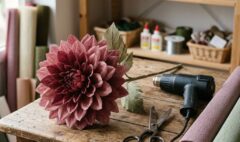
A: Freehanding petals is a classic beginner mistake that almost always leads to symmetry issues. If you have already glued the lopsided flower together, it can be very difficult to salvage without tearing the paper base. A helpful trick is to carefully apply heat from a hair dryer to soften the glue on the most irregular petals, gently peel them off, and replace them with properly measured, template-cut petals. Moving forward, always rely on tested, standardized PDF templates. Using a template not only guarantees perfect symmetry and beautiful proportions but actually saves you hours of frustrating trial and error trying to correct an unbalanced bloom.
📚 Related Giant Flower Guides
- Read Next: Learn more about How To Make Giant Paper Flowers in our detailed guide on How to Make Giant Paper Flowers: The Ultimate Beginner’s Guide.
- Read Next: Learn more about Do You Need A Cricut? Why Hand-Cutting Pdf Flower Templates Is Better in our detailed guide on Do You Need a Cricut? Why Hand-Cutting PDF Flower Templates is Better.
Summary
Giant flower making is an art of patience. Don’t let these five mistakes stop you. Every bloom you create is a unique version of your own creativity. With the right cardstock, a little patience with your glue gun, and a professional template from Giant Flowers Vietnam, you’ll soon be turning paper into wonders!
[Link to Course/Template]